Wednesday, August 21, 2019

Wrangell-St. Elias National park

Today we went exploring in Wrangell-St. Elias National Park.  The park's extreme high point is Mount Saint Elias at 18,008 feet, the second tallest mountain in both the United States and Canada.   Mount Wrangell is an active volcano, one of several volcanoes in the western Wrangell Mountains.  The park also several large glaciers.  The park and preserve form the largest area managed by the National Park Service with a total of 13,175,799 acres, an area that could encapsulate a total of six Yellowstone Parks.  

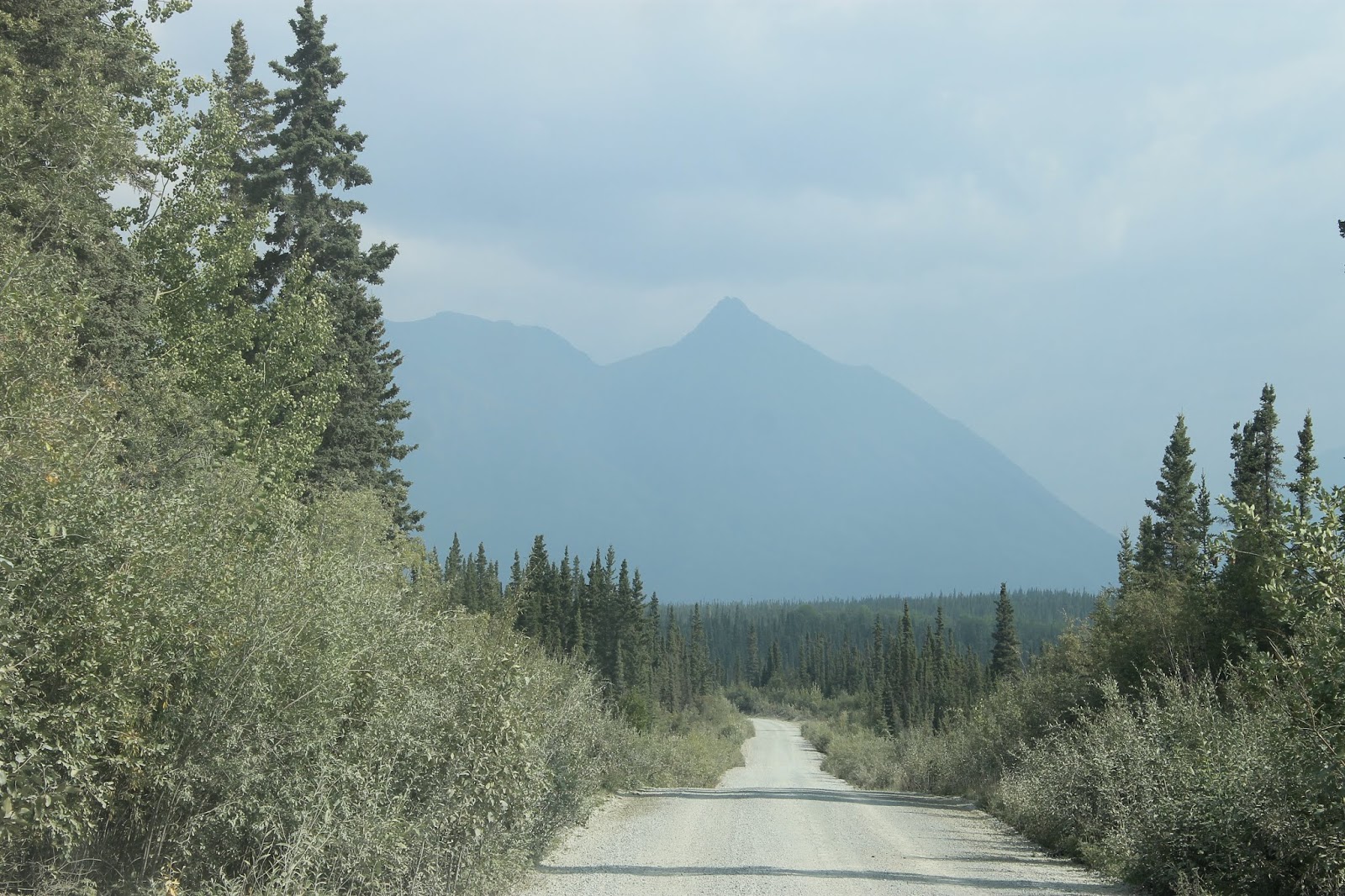
There was only one road into the park and it was 60 miles of mostly a gravel surface.  We left the camper parked at a ranger station in Chitina and only took the truck into the park.  As I entered the park, I immediately saw a moose; however, I wasn't quick enough to get a picture.  Other interest points were the Kuskulana Bridge.  It was built in 1910 for the railroad and it spans 525 feet above the Kuskulana which is 238 feet below.  Another interesting area was where I drove over the Gilahina River.  Above the river was a very old railroad trestle that was still standing.  The road stopped in McCarthy.  At the end of the road was a footbridge that led to Kennicott and Root Glaciers.  

At the end of the day we decided to drive to Valdez.  Coming into Valdez was amazing.  We went through the Thompson Pass and some amazing mountains.  We arrived at about 8:00 and stopped at the first campground we found.


The Kuskulana Bridge

Wooden planks cover the Kuskulana Bridge


Gilahina River Trestle

Kennicott and Root Glaciers

I think this is Mount Blackburn standing at 16390 ft.

Tuesday, August 20, 2019

No to Homer

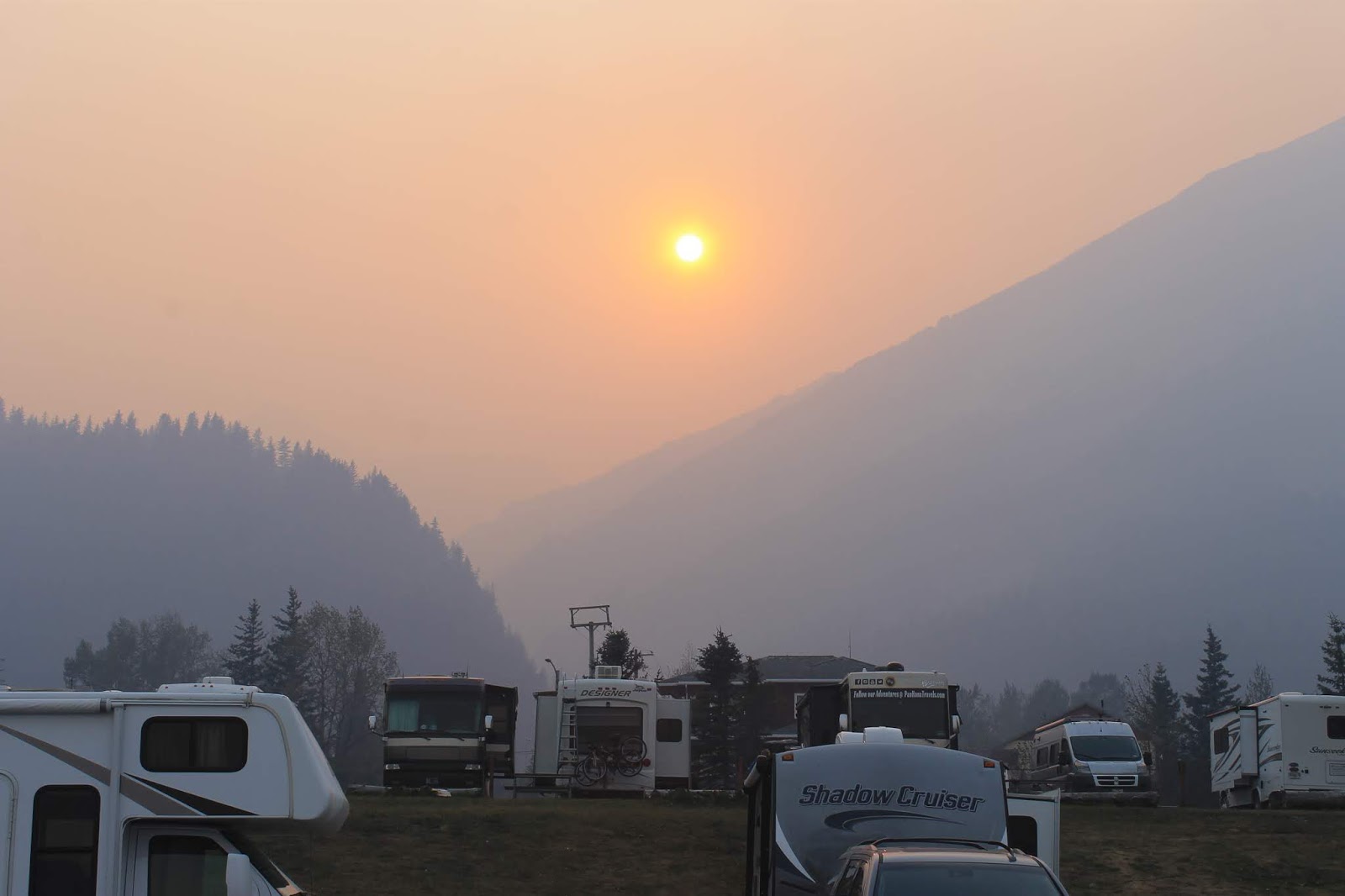
The other day we tried to go to Homer, but the road was closed due to a forest fire.  Yesterday I read that they had opened the road up, so when we got up this morning we headed to Homer. About 45 miles later we see a sign that the road to Homer is closed and the air was getting thick with smoke. We decided to forget about Homer and go somewhere else. We turned around and headed towards Anchorage.  I did see two Beluga whales during the drive. Forest fires had that city filled with smoke. We then decided to just drive east. We drove to Palmer, then headed east on route 1 till we arrived in Tolsona. There was still a lot of smoke in the air as we drove, but it cleared out once we arrived at our destination. Along the way we saw the Matanuska glacier.  It is huge at 27 miles long and 4 miles wide.  We will probably be in Valdez tomorrow evening.

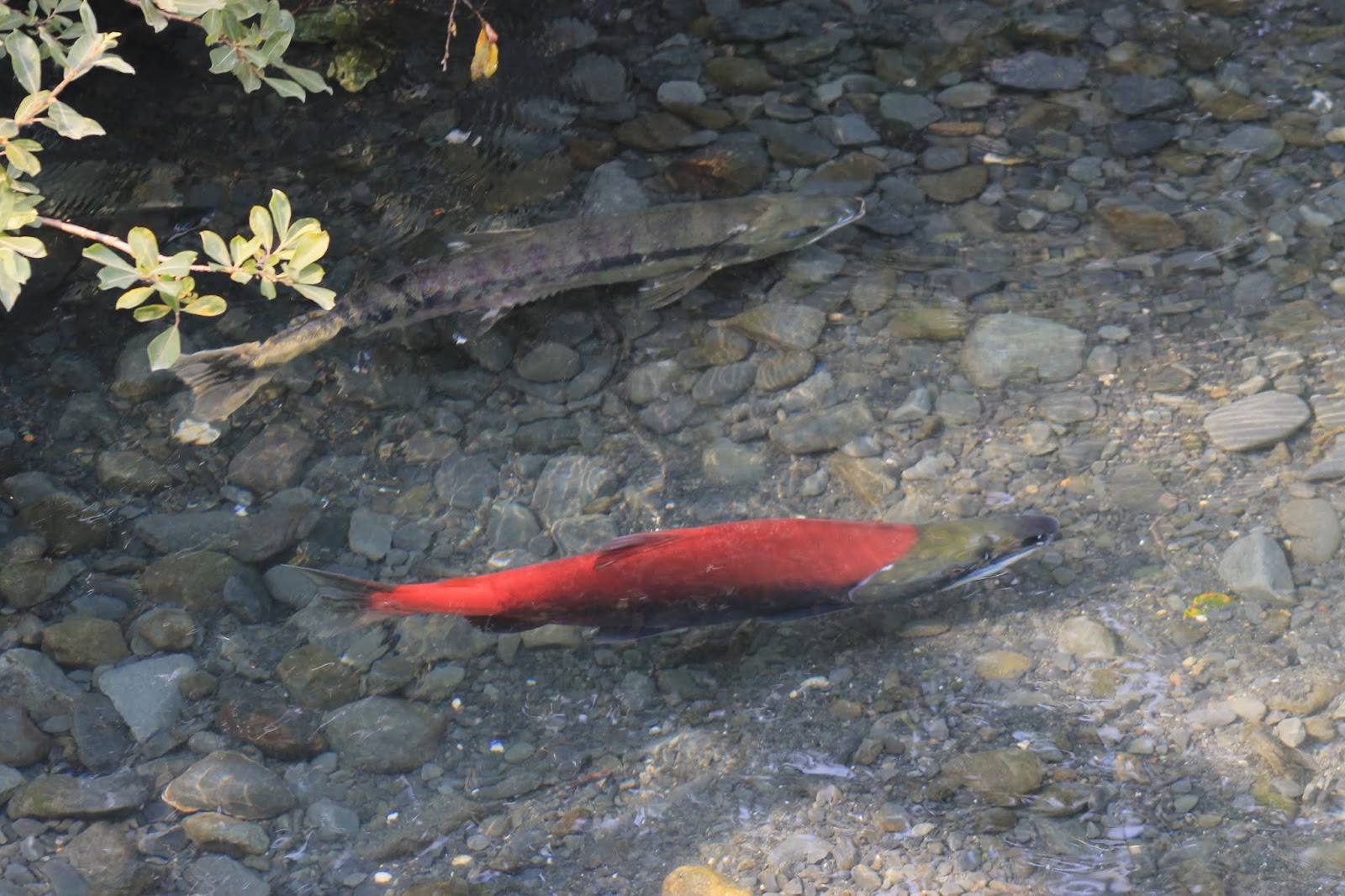
With the smoke I didn't take any pics, but last evening I took some pics of salmon near our campsite.



Monday, August 19, 2019

Portage Glacier

We are still in Whittier and there are many glaciers.  We went to the Portage Lake today and took a cruise to the Portage Glacier.  Here are some various glacier pictures from the area.


Iceberg from the Portage Glacier


Sunday, August 18, 2019

Smoking

We woke up this morning in Seward and a dense Haze of smoke was still in the air. We decided to leave Seward and head towards Homer.  We soon found out the all the smoke in Seward was coming from an area that we needed to travel through to get to Homer. As we were driving the traffic came to a stop. We waited about 1-1/2 hours at a dead stop, then traffic started moving again. We soon found out that it was only moving because the state police was making everyone turn around and leave.  We then decided to leave the area entirely and come back to Homer later. We ended up going to Whittier, Alaska. Whittier is known as the gateway to the Prince William Sound. Many glacier sightseeing cruises leave from Whittier. As we approached the town we could see many glaciers in the mountains.  Numerous waterfalls could be seen below the glaciers.  We also found out that you can't just drive into Whittier. The only way to get into the town is through a 2-1/2 mile train tunnel. About every hour they let a row of cars enter the town through the tunnel. It also costs you $13 to go through the tunnel.

We did find an excellent campground outside the city called Walliwaw Campground. It sits below a glacier and a salmon filled stream runs beside it. The stream is about 20 feet from our campsite. There have been numerous bear sightings in the campground. Just this afternoon there was a bear spotted a few campsites down from ours.


The Whittier 1-1/2 mile train tunnel (that allows autos to go through it)


Inside the train tunnel

The town of Whittier

Our campsite at the Williwaw campground

Saturday, August 17, 2019

Exit Glacier

Yesterday we took a boat to see glaciers.  Today I took a walk to see a glacier.  The glacier was called the "Exit Glacier" and it was in the Kenai Fjords National Park.  I drove to the ranger station, then took a 3 mile hike through the woods to see the glacier. I ended up at an observation point near the glacier. Several of the trails in the park were closed due to the sighting of a bear and her two cubs.  The bad news is that there is a forest fire north of us and the smoke from the fire is being blown out way. It makes it difficult to see and there is a smell of smoke in the air.

Thought I would give a quick driving summary:
  • We are 33 days into our trip.  
  • I've driven 6011 miles
  • I've used 528 gallons of diesel fuel
  • I've spent $1465.46 on diesel fuel.
  • I've added 7.5 gallons of diesel exhaust fluid (DEF) to the truck.
  • I've had my oil changed once.


Path to the glacier observation area


The river created from the melting of the glacier

Overlook at the glacier

Smoke is so thick that the sun is having a hard time shining through

Kenai Fjords National Park

Today we took a boat ride and explored Kenai Fjords National Park.  The park was established in 1980 and covers an area of 669,984 acres on the Kenai Peninsula.  The park contains the Harding Icefield, one of the largest ice fields in the United States. The park is named for the numerous fjords carved by glaciers moving down the mountains from the ice field. The field is the source of at least 38 glaciers.  We saw sea otters, sea lions, orca whales,  sea gulls, puffins, eagles, multiple glaciers, and most of all some amazing scenery.  We were on the boat for 6 hours and traveled about 140 miles.

A picture of our camper from the boat. Ours is the middle trailer.  It is low tide; otherwise you would see the water up near the camper.  There is a 16 ft difference between low and high tide.

The town of Seward in the background as we leave in the boat.

One of the glaciers in the park


A sea otter


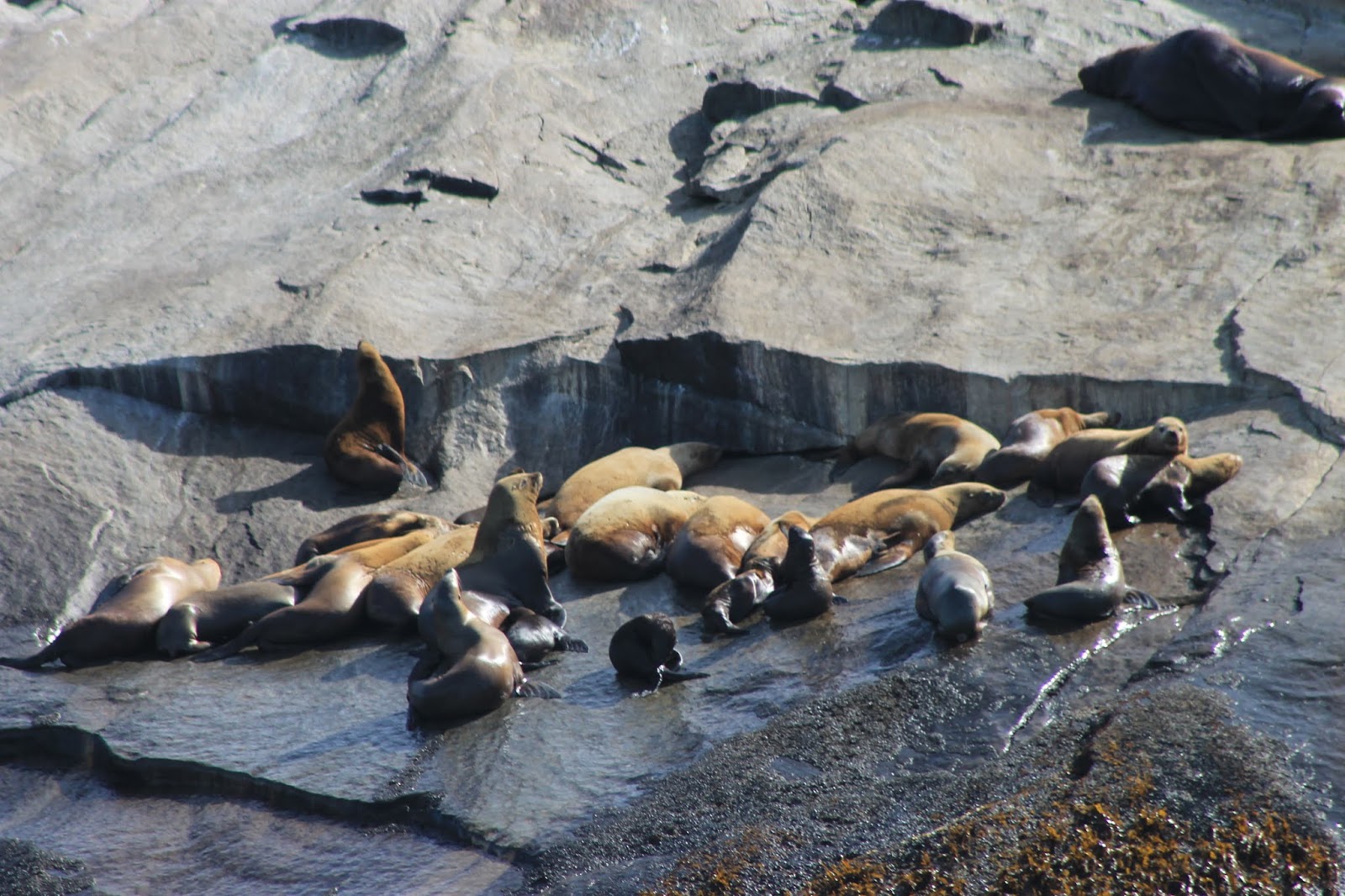
Sea lions hanging out on a rock


Birds nesting on the rocks

A bald eagle resting on a tree branch

The Holgate Glacier.  

The glaciers give off a special blue color.

An Orca Whale 


Not a very good picture, but it is a puffin

Friday, August 16, 2019

Seward

We hooked the camper to the truck this morning and drove to Seward, Alaska.  Seward is a little town on the Kenai Peninsula.  We plan on spending the next week or so on the Peninsula and will be staying in Seward for at least 3 nights.  We were very lucky when we arrived at the city campground and found a site that was right next to Resurrection Bay.  Across the bay are mountains, one of which reaches an elevation of over 5200 feet.  There is also a large glacier on the mountains.  We saw several bald eagles today as they flew right above our camper.  We also had a great day talking to the other campers.  Our next door neighbor is from England and is spending several weeks in Alaska.  We sat around the campfire for several hours exchanging stories.  Note: the Internet is really poor here, so I can't upload too many pictures.

Scenery while traveling to Seward

Resurrection Bay with Mt. Alice in the background.  The picture is taken from our campsite.

Bald eagle